


Key takeaways
• How you assemble a software development team predicts the project more than the tech stack does. Tech attrition runs 13–21% a year and 69% of developers stay under two years (2025 industry surveys). If your vendor can’t keep people, your roadmap stalls.
• A 2% offer rate is a quality floor, not a slogan. Fora Soft reviews ~500 candidates, screens 100, tests 40, assesses 12, and hires 10. The same funnel shape you should demand from any shortlisted vendor.
• Probation is where the real filtering happens. An 80-hour paid pet project on the vendor’s dime catches slow, careless, or passive engineers before they ever touch your code.
• Match the engagement model to your leadership bandwidth. Staff augmentation for capacity gaps, a dedicated team for evolving roadmaps, project outsourcing for fixed scope. Getting this wrong is the top reason outsourced projects drift.
• A bad senior hire is expensive. The US Department of Labor pegs a bad hire at 30%+ of first-year pay; for a senior engineer, industry estimates reach $150k–$300k once you count a six-month drag on the team.
Why Fora Soft wrote this playbook
A great software development team is not a lucky draw. It is a selection machine. Assembling the right people is half of shipping a product on time; the other half is keeping that team together long enough to ship the next quarter too. US software roles are projected to grow 15% through 2034 (Bureau of Labor Statistics), so the constraint is never the raw number of developers. It is finding ones who actually ship and stay. Fora Soft has spent two decades doing exactly that, shipping 250+ multimedia products since 2005: video conferencing, AI video recognition, AR/VR, telemedicine, IPTV, video surveillance. This playbook is how we build a team, and what you should demand from any vendor you evaluate — including us.
When BrainCert asked us to turn their virtual-classroom concept into a production platform, the win wasn’t the interactive whiteboard or the WebRTC stack. It was that the same engineers stayed on the roadmap long enough to deliver 500M+ minutes across 10 datacenters, four Brandon Hall Awards, and a bootstrapped business that reached $3M in revenue in 2024. That continuity came from a hiring funnel that rejects 98% of candidates and a probation system that weeds out another 10–15% before they ever touch paying code. See it yourself on the BrainCert case study.
Our CEO Nikolay puts the philosophy in one sentence: “If you don’t love what you do, you’ll have to compete with those who do — and that’s a losing game.” Translated into hiring: we screen for curiosity and ownership first, then hard skills, then fit. The rest of this guide is the mechanics.
Need a team that stays through your whole roadmap?
We’ll walk you through who would work on your project, how they were hired, and what they’ve shipped, before you commit to anything.
The hiring funnel math — what a 2% pass rate actually buys you
Most agencies hire 12–18% of the candidates they interview, because their economics need bodies on billable seats. That number is the single easiest tell for cut-rate outsourcing, and the fastest way to predict whether your team will hold together six months into the roadmap. Here is the funnel Fora Soft uses to select top developers, next to the industry average:
| Stage | Fora Soft candidates | Pass rate | Typical agency | What it filters |
|---|---|---|---|---|
| Resumes reviewed | 500 | 100% | 500 | Baseline pool |
| HR phone screen | 100 (20%) | 20% | ~40% | English, curiosity, base knowledge |
| Behavioral interview | 40 (40%) | 40% | ~60% | Teamwork, ownership |
| Technical + test task | 12 (30%) | 30% | ~55% | Code quality, debugging, system thinking |
| Final CEO interview | 10 (83%) | 83% | ~90% | Values alignment, red-flag override |
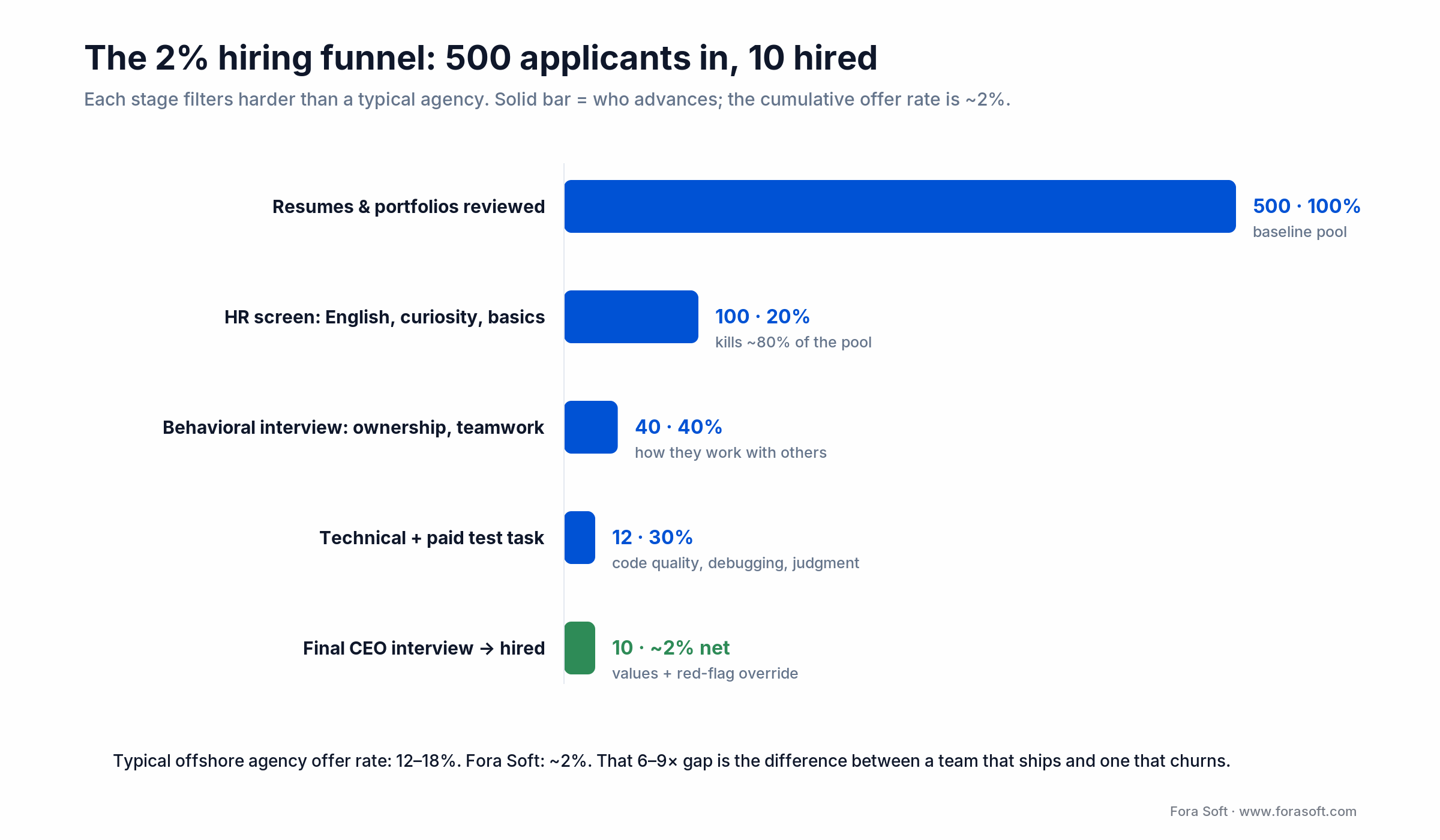
Figure 1. Each stage filters harder than a typical agency’s; the cumulative offer rate lands near 2%.
Compounded, our offer rate lands at 2%. A typical offshore agency lands near 12–18%. That 6–9× difference is not marketing. It is the gap between engineers who read documentation on weekends and engineers who need three Slack pings to answer a question.
Question to ask any vendor: “How many candidates do you interview per hire, and what’s your 90-day attrition rate?” If they can’t answer in numbers, they don’t measure it.
What a software development team is actually made of
Before you hire one, know what a software development team is: nine roles across three layers, each owning a different kind of risk. Small products merge roles — a tech lead who also runs DevOps — and large ones split them further, but the three layers stay the same. When a project quietly slips, a missing layer is usually why, and the two most often skipped are QA and DevOps.
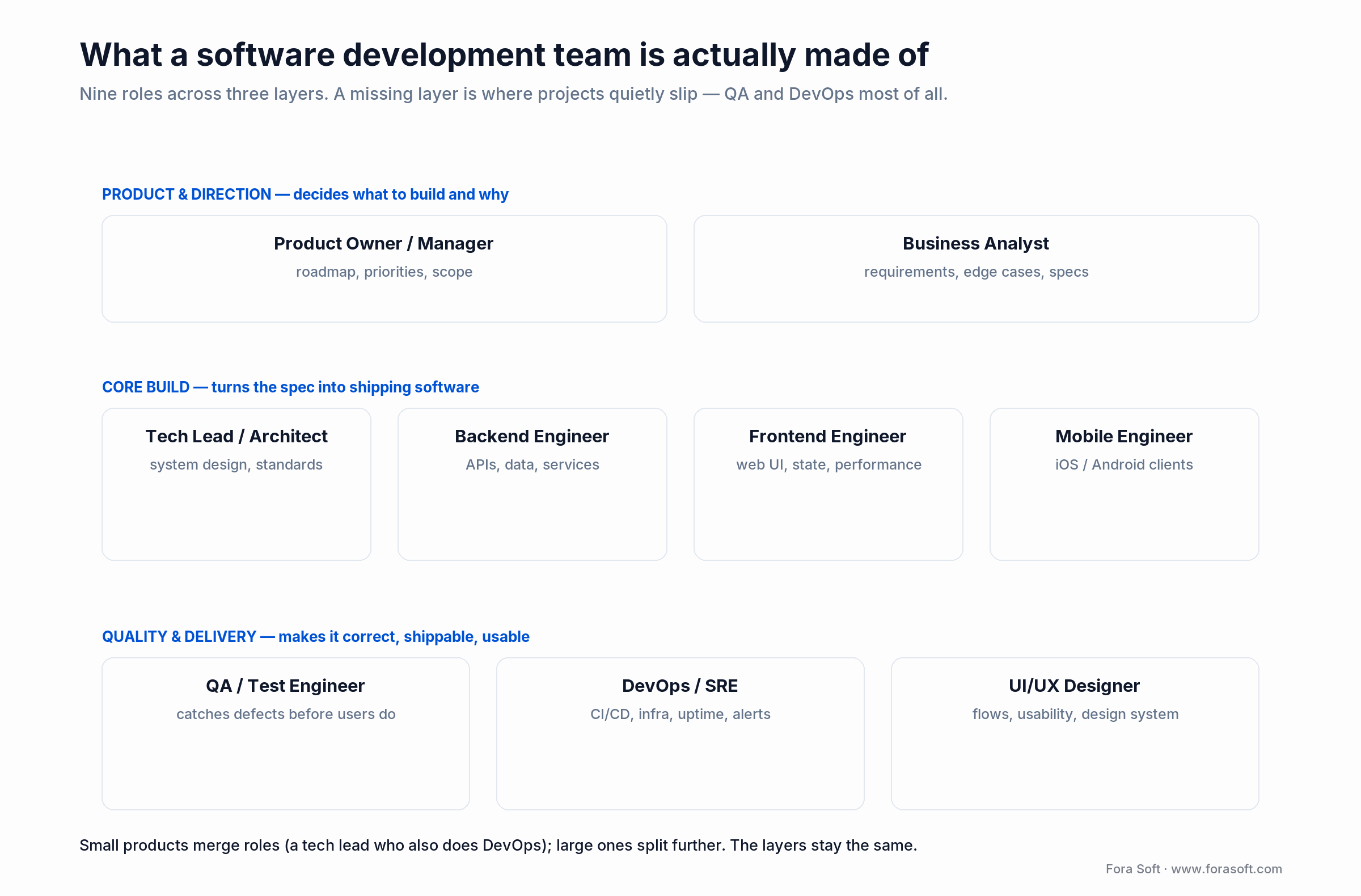
Figure 2. The nine roles most software products need, grouped by the layer of risk each one owns.
Product and direction — decides what to build
The Product Owner or Manager owns the roadmap, priorities, and scope; they are the single throat to choke on “what ships next.” The Business Analyst turns fuzzy asks into precise requirements and edge cases, the role most startups skip and then pay for in rework. On a small team the founder often plays Product Owner directly, which works right up until the backlog outgrows one person’s head.
Core build — turns the spec into shipping software
The Tech Lead or Architect owns system design and the standards everyone else codes to. Backend engineers build the APIs, data, and services; Frontend engineers own the web UI, state, and performance; Mobile engineers ship the iOS and Android clients. For narrow domains — real-time video, computer vision — this layer is where specialist depth pays off, because generic full-stack engineers burn weeks learning what a specialist already knows.
Quality and delivery — makes it correct, shippable, usable
A QA / Test Engineer catches defects before your users do. The reason a dedicated tester belongs on the team is simple: developers are the worst judges of their own bugs, and a separate set of eyes finds the ones that reach production. DevOps / SRE owns CI/CD, infrastructure, uptime, and alerting. A UI/UX Designer owns flows, usability, and the design system. Skip this layer and you ship fast for a month, then spend the next three firefighting.
The 5-stage interview stack — what every software hire should pass
Most senior software roles now run four to six interview stages. We use five, because the extra one is a paid test task that catches failures a live interview never will. Here is what each stage actually tests, and the question you should ask any vendor about their own version.
Stage 1 — Resume and portfolio filter
What we look for. Real code, not titles. We ignore years-of-experience stats and read commit histories, open-source contributions, and past projects. A candidate with two years of shipping production WebRTC beats a candidate with five years of Jira tickets, every time.
Typical reject signal. Copy-paste skill lists, no public code, vague project descriptions (“worked on backend”), gaps with no narrative.
Stage 2 — HR screen for curiosity, English, and baseline knowledge
What we test. Three things in 30 minutes: can they explain a technical concept clearly in English; do they have a side project, blog, or GitHub they light up about; and do they understand the basics of the stack they claim (explain WebRTC signalling without googling)?
Why this stage kills ~80% of the pool. Most developers can code. Fewer can explain. Fewer still are genuinely curious. The funnel collapses here.
Stage 3 — Technical interview with the department lead
What a department head or senior engineer runs. 60–90 minutes, split between a close read of one resume project (what they decided and why, what they’d change now), a debugging exercise on real production-shaped code rather than leetcode, and a small system-design sketch for the job family (“design the ingress for a 10k-viewer live stream”).
AI policy. Candidates can use ChatGPT, Claude, or Copilot in this round, because that is how the job is done in 2026: 84% of developers use or plan to use AI tools (Stack Overflow 2025 survey). We watch how a candidate uses the tool, whether they verify its output or paste it blindly, not whether they memorised binary-tree traversals.
Stage 4 — Paid test assignment with written feedback
Why this is the most important stage. A live interview tells you how someone performs under pressure. A test task tells you how they work when nobody is watching, which is how 95% of your project will be delivered.
What we grade. Correctness, code structure, naming, tests, README quality, Git hygiene, and the questions they ask before starting. Every candidate gets detailed written feedback with specific pages to read next, regardless of outcome. That habit alone generates roughly 30% of our best referrals.
Stage 5 — Final interview with the CEO
Not a formality. Nikolay personally approves every offer. The CEO stage is a values check and a red-flag override — the point where gut is allowed to overrule a passed technical interview. Roughly one in six candidates who clear Stage 4 still get declined here.
Reach for this 5-stage stack when: you’re hiring for a multi-quarter engagement and a senior mistake would cost 4–8 weeks to unwind. For short staff-augmentation stints, stages 1–3 are usually enough.
The probationary system — why it matters for your project
A 5-stage interview catches roughly 85% of bad hires. The probationary period catches the rest: the people who interview well but don’t ship. Done right, this is paid entirely by the vendor, not the client. Done wrong, it is billed to your project and you never know it happened.
The Fora Soft probation has three stages every dedicated-team vendor should offer: a sandboxed pet project, a real-project mentorship, and a 30-day evaluation with a 12-month development plan.
The 80-hour pet project — catching risk before it reaches you
Every new engineer at Fora Soft builds a small but production-shaped product — usually a text and video chat on our media-server stack — in an 80-hour “Trial by Fire” sandbox before touching client code. We grade three variables, deliberately named:
1. Speed of execution. Did they hit the 80-hour cap? Missing the deadline is a hard no. A paying client cannot afford to learn this later.
2. Quality. Code reviewed against our internal standard: readable naming, tests where sensible, a Git history that tells a story, no TODO drift.
3. Initiative. Did they ask sharp questions, propose alternatives, notice missing requirements — or just wait to be told? The difference compounds into months of hidden slippage once they’re on your project.
What to demand from any vendor: ask whether new hires build a sandboxed project before billing your account. If the answer is “we onboard on the client’s codebase,” you are paying for their training.
The mentorship model — how we lock in velocity
After the pet project, the new engineer joins a real project under a dedicated mentor — a Middle-or-above engineer who has been with us 6+ months and went through the same probation. Mentors track four numbers, not vibes:
1. Quality. Pull-request acceptance rate, review comments per PR, escaped defects over 30 days.
2. Speed. Story points or hours delivered versus committed; estimate accuracy within ±20%.
3. Teamwork. Async communication hygiene, unblocking others, standup clarity, code-review participation.
4. Initiative. Bugs spotted and filed without being asked, infra ideas proposed, process improvements suggested.
Mentorship is not a cost center. The mentor usually learns as much as the mentee, especially on cross-stack questions. That cross-pollination is why our mid-level engineers ship at senior speed on narrow multimedia topics like WebRTC and LiveKit. It is also why we keep a public AI-for-video-engineering learn track — teaching the domain is part of how we retain people in it.
Evaluation and the 12-month development plan
After ~30 days on a real project we run a formal evaluation: what the engineer has absorbed, where the gaps are, and what the next 12 months should look like. The plan prioritises technologies the client roadmap actually needs. A common mistake is sending people to generic “cloud architect” courses when your account is shipping LiveKit agents.
At the end of probation (often before the standard three months), the team fills an anonymous 360 questionnaire. A final interview presents the results; the engineer decides whether to keep the mentor or graduate. Most keep the mentor. It converts into long-term velocity, not hand-holding.
Want to audit a vendor you’re already working with?
We’ll benchmark your current team’s hiring and delivery process against the standard in this article — no sales pitch, just a second opinion.
Red flags when you evaluate any dev agency
The cheapest signal that an outsourcing engagement will fail shows up in the first 30 minutes of the first sales call. These are the five we see most.
1. “Yes, we can do all of that.” You list 25 features. They say yes to every one without a single follow-up question. Reject — you’re buying bodies, not product thinking.
2. No public code. A serious agency has a GitHub org, a few open-source contributions, and is happy to show sanitised code samples. “NDA” is not an answer in 2026. Everyone signs NDAs; everyone can still show something.
3. Refusing named references. Ask for three named clients you can call directly. An agency that can’t produce them has either churned every client or never had repeat business.
4. You never meet the engineers. If the sales engineer on the call isn’t on your project, demand to meet the people who will actually ship your code. Agencies that refuse usually rotate juniors in after signing.
5. Fixed-price bid on a fuzzy scope. Any agency quoting fixed-price for a scope you haven’t written down will miss the budget, the deadline, or the quality bar, usually all three. A disciplined vendor insists on a short planning phase first.
Security and compliance — what to audit before signing
For multimedia, fintech, health, and education products, the vendor’s security posture is part of your product’s risk profile. A disciplined agency volunteers most of this; the rest you should ask for in writing.
1. Written access and data-handling policies. Who can touch client code, what data leaves the VPN, how long it is retained. Two-factor on every tool. Credentials rotated within 24 hours of an engineer’s departure.
2. GDPR, HIPAA, SOC 2 posture. Even without a SOC 2 certificate, the agency should answer a 30-question security questionnaire without silence. HIPAA engagements require a BAA and a named security lead.
3. AI and third-party model dependencies. In 2026 this is the newest trap: if the agency silently sends your customer data to a third-party LLM, you inherit that exposure. Demand a data-flow diagram for every AI feature.
4. Code ownership and IP assignment. The master agreement must assign all work product to the client — code, docs, derivative materials, test assets. Check the fine print on “vendor-retained libraries.”
How to verify references and past work — the 2-hour audit
The highest-signal pre-signing step, and the one most buyers skip. Block two hours on your calendar and do this before you send an MSA.
1. Three named references, called directly. Not email. Ask: would they hire the vendor again for the same project? What broke, and how was it fixed? Has the assigned team rotated? A silent beat after any of these is a tell.
2. Working demo of a similar product. Not slides, not screenshots — a live session where the agency drives a past product end-to-end. Watch how confident they are inside their own code.
3. Public footprint cross-check. Clutch reviews (look for recent ones), GitHub org activity, engineering-blog depth, conference talks. Fora Soft’s own footprint lives at our portfolio of 250+ shipped products.
4. LinkedIn background of the proposed team. How long have the assigned engineers been at the agency? Under six months on average is a risk. You may be buying into a revolving door.
The 12-week ramp — what good onboarding looks like
A good team on a bad ramp still misses your first quarter. This is the cadence we run on every new dedicated-team engagement — and the cadence you should copy even if you hire a different vendor.
Weeks 1–2 — Discovery. Requirements interviews, workflow mapping, architecture sketch, risk register. The deliverable is a short discovery doc you could hand to a second vendor if you wanted to.
Weeks 3–4 — Environment and first slice. Dev, staging, and CI/CD provisioned. A first vertical slice shipped to staging to prove the toolchain, not to deliver feature value. Any vendor that skips this is setting up a first-feature disaster.
Weeks 5–8 — First customer-facing feature. One feature shipped end-to-end to production, including monitoring, alerting, and a one-page runbook. Your velocity baseline is measured here.
Weeks 9–12 — Cadence lock. Two-week sprint cadence with planning, demo, and retro. A written commitment on velocity, quality, and incident response. From week 13 the team is in steady-state delivery.
Staff augmentation vs dedicated team vs project outsourcing
Choosing the wrong engagement model is the single biggest reason outsourced projects drift. The three common options trade control for accountability and speed of ramp. Answer the questions top-down and the model falls out:
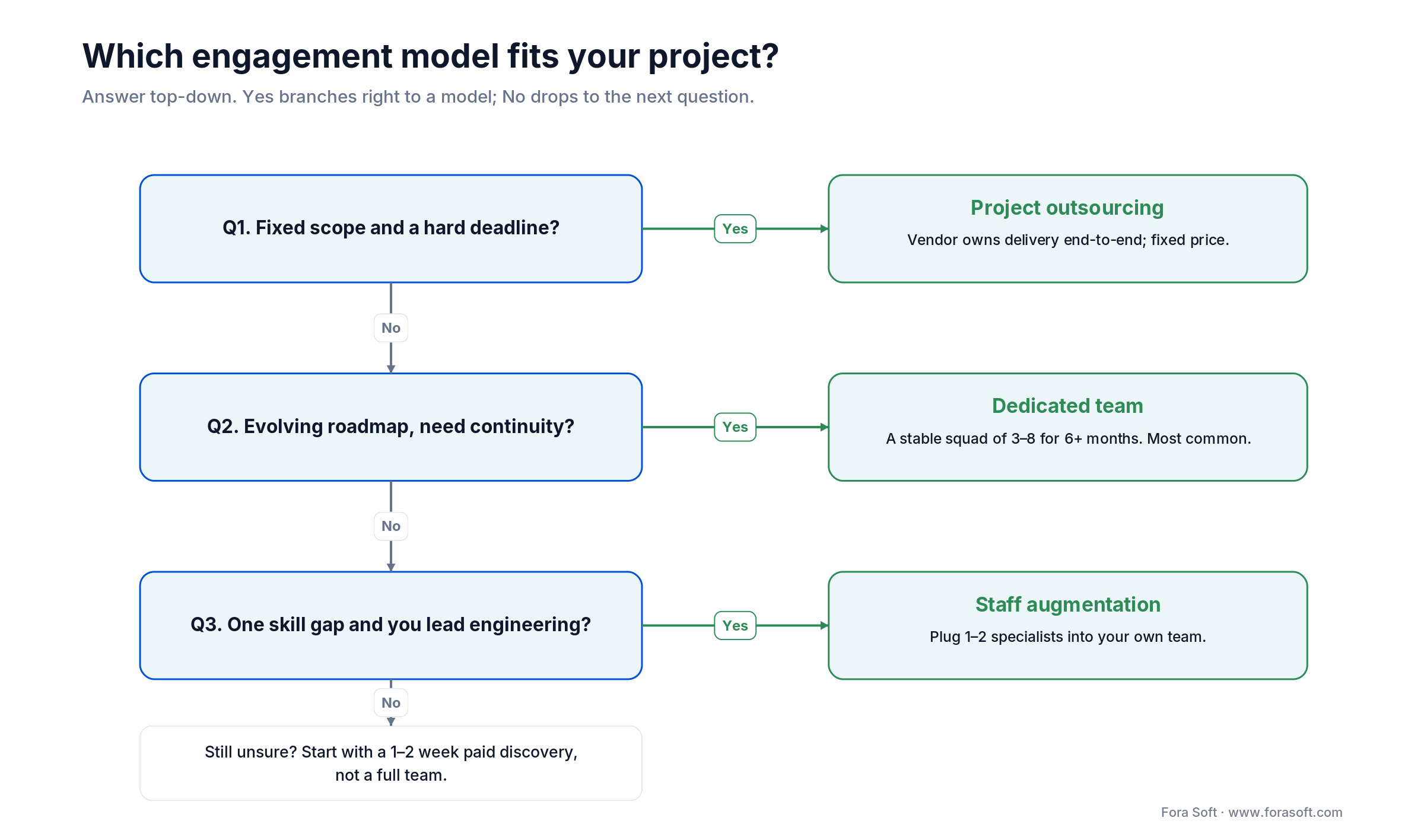
Figure 3. A quick way to pick an engagement model from your roadmap shape and how much you want to manage.
| Dimension | Staff aug | Dedicated team | Project outsourcing |
|---|---|---|---|
| Who manages the team | You do | Vendor PM, you set priorities | Vendor end-to-end |
| Pricing shape | Hourly T&M | Monthly run-rate | Fixed price or phased T&M |
| Client PM overhead | High (15–25%) | Medium (5–10%) | Low (<5%) |
| Best for | Capacity gaps, one specific skill | Evolving roadmap, continuity | Fixed scope, hard deadline |
| Senior rate (nearshore, 2026) | $55–$85/hr | $60–$90/hr blended | $65–$100/hr effective |
| Ramp time | 1–2 weeks | 3–4 weeks | 4–8 weeks (discovery) |
Reach for staff augmentation when: you have strong internal engineering leadership and a written backlog, and you need 1–2 missing skills (a WebRTC or LiveKit expert) for under six months.
Reach for a dedicated team when: your roadmap is evolving, you’re past MVP, and you need a stable squad of 3–8 who stay on the product for 6+ months. This is the most common Fora Soft engagement.
Reach for project outsourcing when: scope is fixed, the deadline is hard, and you’re willing to pay a 10–20% risk premium for the vendor to own end-to-end delivery.
Mini case — how this hiring pipeline shipped BrainCert
Situation. BrainCert came to us with a virtual-classroom concept: HD video, an interactive whiteboard with LaTeX and Wolfram Alpha rendering, live polls, proctored exams, SCORM/xAPI documents, white-label branding, and cross-platform clients (iOS, Android, Web). A junior-heavy team would have bled 12–18 months just learning WebRTC reliability on unreliable education networks.
What we did. We staffed a dedicated team of senior multimedia engineers out of the 2% funnel, a group that stayed small (around 12 people) and stable across a multi-year engagement. Every engineer had shipped at least one production WebRTC product before touching BrainCert. We ran a two-week planning phase, split the architecture into media server, signalling, whiteboard CRDT, and client-SDK layers, and put a mentor on every new engineer we added.
Outcome. BrainCert now runs 500M+ classroom minutes across 10 datacenters at 99.995% uptime, serves 100,000+ customers, reached $3M in revenue in 2024 (58% year over year), and has won the Brandon Hall Award four times. Their CEO called the work “outstanding in every aspect.” Want a similar independent read on your stack? Book a 30-min review.
Cost math — what disciplined hiring actually costs (and saves)
A 2% hiring funnel is not free. Fora Soft spends roughly 40–60 hours of lead and HR time per offer, plus the 80-hour paid pet project that never bills clients. At fully-loaded internal rates that is about $6k–$10k per hire — absorbed by us, not added to your invoice.
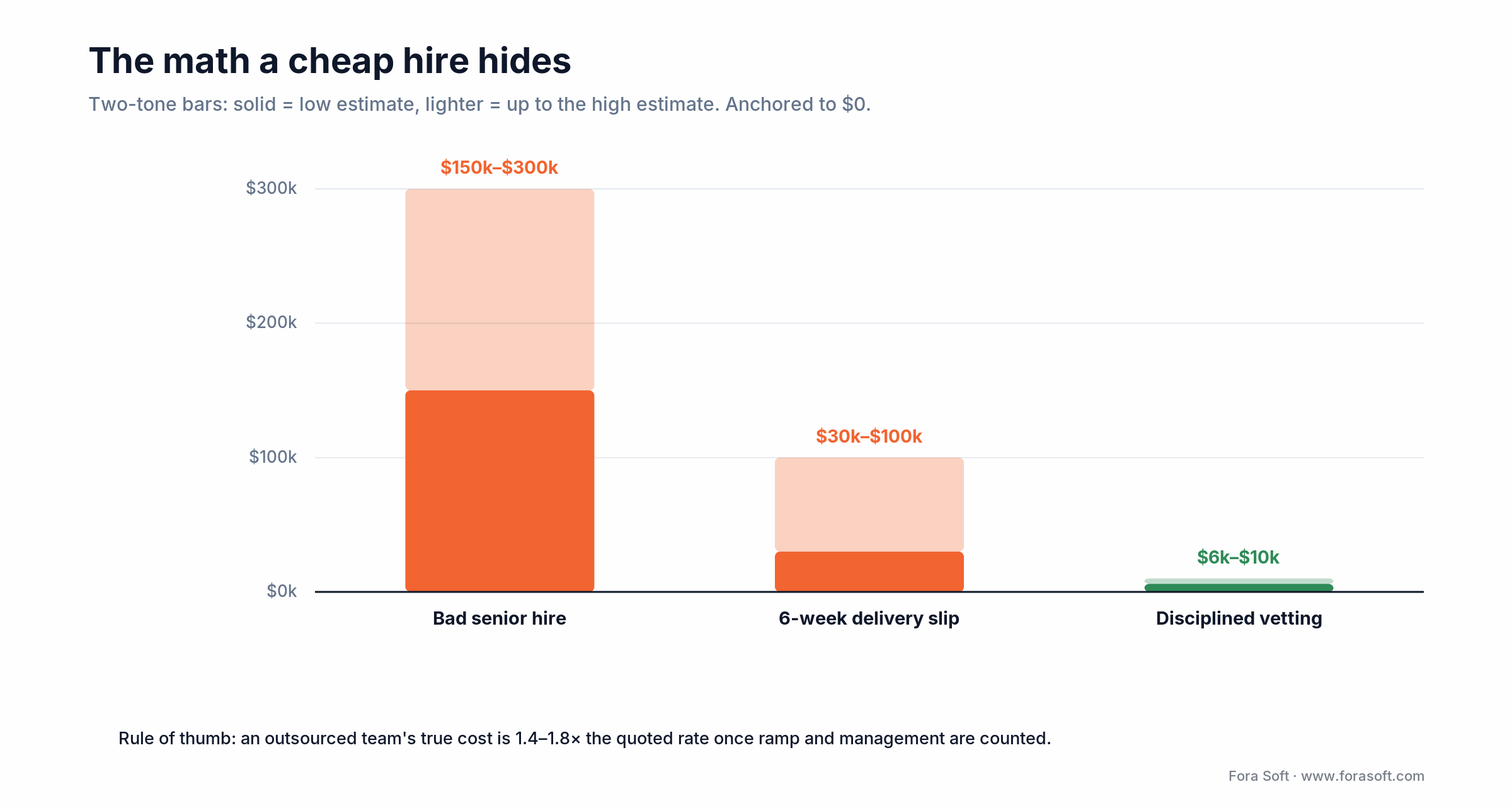
Figure 4. The cost a cheap hire hides: a bad senior versus the vendor-absorbed vetting that prevents it.
The saving is on your side of the ledger. The US Department of Labor puts the cost of a bad hire at 30%+ of first-year pay, and once you count a six-month productivity drag across a team, industry estimates for a bad senior engineer run $150k–$300k. On a live roadmap that usually shows up as 4–8 weeks of slipped delivery before the person is replaced — $30k–$100k of waste you never see itemised. One more figure worth knowing: an outsourced team’s true cost is typically 1.4–1.8× the quoted hourly rate once ramp and management are counted, so the cheapest rate card rarely wins.
We pair the hiring standard with Agent Engineering — AI-assisted delivery with a senior engineer in the loop — and we’re deliberate about where it helps. AI saves real hours on scaffolding, boilerplate, test generation, and mechanical refactors. It does not speed up the hard part: a 2025 METR randomised trial found experienced developers were about 19% slower on code they knew well when they leaned on early-2025 AI tools, even though they felt faster. So we treat AI as an accelerator on the mechanical 20–40% of a feature, not a discount on the engineering judgment you’re actually paying for. For how we turn that into a number, see our software estimating guide.
Not sure which engagement model fits your roadmap?
A 30-minute call with our CEO typically shortens vendor shortlisting from six weeks to one — with no obligation to hire us.
A decision framework — pick a dev team in five questions
Q1. What is the shape of my roadmap for the next 12 months? Fixed scope and a hard deadline → project outsourcing. Evolving and multi-phase → dedicated team. One specific skill gap → staff augmentation.
Q2. Do I have a senior engineering lead on my side? Yes → staff aug or a dedicated team with you setting priorities. No → dedicated team with a vendor PM, or full project outsourcing.
Q3. How narrow is my technology? Multimedia, real-time video, AI agents, and computer vision are specialist fields with small talent pools — vet deeply or hire a specialist shop. Generic CRUD SaaS → most competent agencies can deliver.
Q4. What is my regulatory envelope? HIPAA, GDPR, SOC 2, PCI — demand written policies, pen-test history, and a named security lead from day one. An agency that answers vaguely is disqualified.
Q5. What is the cost of a 6-week slip? If the answer is “missed funding round” or “missed customer contract,” pay the premium for a proven senior team. If the answer is “annoying,” cheaper offshore can still work.
KPIs to track once the team is assembled
Quality KPIs. Escaped defects per release under 3, PR review comments per PR 4–8, average PR lifetime under 24h. If PRs take days to merge, communication is broken — not the code.
Business KPIs. Scope delivered per sprint against commitment above 85%, estimate accuracy within ±20%, demo-to-prod cycle under 2 weeks for new features. These map directly to how predictable you can be with your own customers.
Reliability KPIs. Team attrition under 10% on your engagement (against the 13–21% industry baseline), same-day incident acknowledgement 24/7 for production systems, P1 MTTR under 4h. If your vendor won’t commit to these in writing, you don’t have a reliability contract.
When NOT to hire an external dev team
Outsourcing is not always the answer — and a vendor that pretends otherwise is selling you.
Your product is your only asset and the codebase is the IP. If you’re a product-led startup and the software itself is your core differentiator, invest in an in-house senior or two first. Outsource around them, not instead of them.
You don’t yet know what you want. If your spec is “something like Uber but for…” with no written requirements, start with a one- to two-week paid discovery, not a full team. A disciplined planning phase saves 5–10× its cost in avoided rework.
You can’t commit a decision-maker to weekly reviews. Even the best vendor stalls without an authorised client lead. If you can’t dedicate 3–5 hours a week, delay the engagement.
FAQ
What roles make up a software development team?
Nine across three layers: a Product Owner/Manager and Business Analyst set direction; a Tech Lead/Architect plus backend, frontend, and mobile engineers build; and a QA/Test engineer, a DevOps/SRE, and a UI/UX designer make it correct, shippable, and usable. Small products merge roles; large ones split them further, but the three layers stay the same.
Why does a software development team need a dedicated QA tester?
Because developers are the worst judges of their own bugs. A separate QA engineer catches defects the author is blind to, owns regression and edge-case coverage, and keeps escaped defects per release low. On teams without one, quality debt compounds until it costs more to fix than the feature did to build.
How long does the Fora Soft hiring process take from application to offer?
About 3–4 weeks for a senior role. Resume review is same-day, the HR screen within a week, the technical interview the following week, a 5–7 day test task, then a final CEO interview. We deliberately don’t compress further: the test task needs real thinking time.
Can I interview engineers before they are assigned to my project?
Yes. Every client gets a CV pack and a 30-minute call with each proposed engineer before the contract is signed. You can reject a match with no penalty. Any vendor that refuses this should come off your shortlist.
What’s the actual cost of a Fora Soft dedicated team?
It depends on squad shape. A typical 4-person dedicated team (1 lead + 2 engineers + 1 QA) runs in the nearshore-senior rate range — a predictable monthly run-rate your CFO can budget against. We give a written estimate on the first call, no charge. Remember the rule of thumb: true cost is 1.4–1.8× the quoted rate once ramp and management are counted.
What happens if an engineer on my project underperforms?
We swap them within 2–3 weeks at no cost, with full knowledge transfer. Our probation catches most mismatches before they touch client code, but when one slips through, replacement is our responsibility, not yours.
Do you specialize in specific tech stacks?
Our deep specialties are multimedia and real-time communication: WebRTC, LiveKit, Agora, Twilio, Wowza, custom media servers, AI video recognition, and telemedicine. We also staff standard web/mobile stacks (React, Node, Swift, Kotlin, Flutter) to round out product teams around those specialisms.
What’s your engineer attrition rate on client engagements?
Below the 13–21% industry baseline. Retention comes from narrow specialisation (engineers work on interesting multimedia problems, not generic CRUD) and the mentorship-plus-development-plan structure. Most engineers who join a project stay through the full 12–24 month roadmap.
How does Agent Engineering change what I pay per feature?
AI-assisted delivery compresses the scaffolding, boilerplate, migration, and test-generation parts of a feature — typically 20–40% of the effort. It does not speed up novel engineering; a 2025 METR trial even found experienced developers slower on familiar code with AI. Net effect on invoice: mid-single-digit savings on small features, double-digit on large refactors, no change on R&D-heavy unique work where the human is the bottleneck.
What to Read Next
Choosing a vendor
How to Choose a Software Development Company
Using Clutch and other directories to shortlist and verify a partner.
Estimating
A Guide to Making Estimates for Software Projects
How we turn a fuzzy brief into an accurate cost and timeline in five days.
Quality
Ensuring Quality: Testing at Every Stage
The QA stack that complements the hiring funnel and keeps defects below 3 per release.
AI Delivery
AI in the Software Development Process
Where Agent Engineering compresses delivery cost, and where it honestly doesn’t.
Ready to assemble a team that actually ships?
A software development team that ships and stays is not a lucky hire. It is a defined set of roles across product, build, and quality; a 2% hiring funnel that selects top developers rather than filling seats; a paid 80-hour pet project; a mentor who tracks four numbers; a 12-month development plan tied to your roadmap; and an engagement model that matches your leadership bandwidth. Get those pieces right and your project shifts from “hope it lands” to “predictable sprint velocity.”
Fora Soft has run this exact machine since 2005 across 250+ shipped products, from BrainCert to TradeCaster to VALT. If you’re shortlisting vendors for a multimedia, video, or AI product, the fastest way to see whether we fit is a 30-minute call — we’ll walk you through the engineers who would join your project, how they were vetted, and what they have shipped.
Meet the team that would actually build it
A no-obligation 30-minute call with our CEO — initial requirements, an architecture sketch, and an honest cost estimate, free of charge.

